
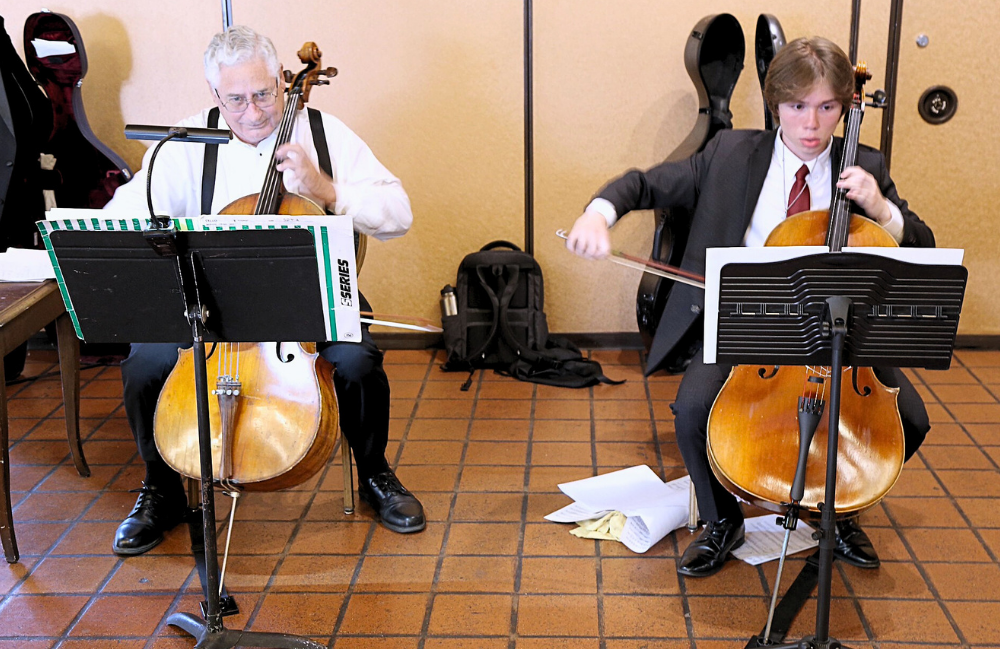
Ahead of this year’s season opener football game, The University of Texas at Austin reposted a reel of Arturo Gonzalez, a first-year chemical engineering student, Longhorn fanatic, and musician. He’d previously jazzed up a practice video, creating a cello compilation out of the ‘Texas Fight’ song to announce he would finally become a Longhorn. Folks responded. That video, featured on Texas ChE’s Instagram page, has more than 209K views and months later still garners attention.
Turns out Arturo is part of a long line of chemical engineers who also wield a musical instrument. Before Arturo became a Longhorn, he and Gregg Goodnight, B.S. 1973, connected over music. Both avid cellists, they performed together in the Houston area. Delighted to hear Arturo was an aspiring Longhorn chemical engineer, Gregg connected Arturo to the department before he was admitted. The two welcomed honorees at this year’s Academy of Distinguished Chemical Engineers banquet.
Third-year Texas ChE student Brilon Lichtie, whose instrument is his voice, is a tenor with the Longhorn Singers, the premier show choir of the University. And, Texas Leader Magazine featured a story on Dennis Griffith, B.S. 1970, who joined the Longhorn Band in his second year at UT. He was part of the Big Bertha Crew who hauled around the world’s largest bass drum. Dennis also plays French horn as a member of the Longhorn Alumni Band. He and his wife, Louise Richman, share their philanthropic philosophy, but that’s another story.
And our department's connection with the band goes back even further…
The man who founded the celebrated Longhorn Band, Eugene Paul ‘E.P.’ Schoch, also founded the chemical engineering department.
The Chemical Connection
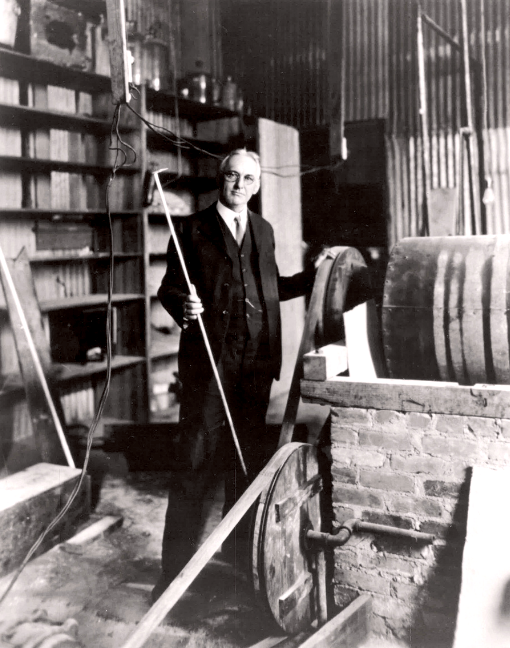
E.P. Schoch, pronounced ‘shock’, was born to American parents in Berlin in 1871 and moved to Texas in the early 1880s. He entered The University of Texas as an undergraduate shortly after it opened and in 1894 was the University's first undergraduate to earn a civil engineering degree. After a year surveying in San Antonio, he returned to Austin to earn his master's in chemistry in 1896. Serving as an instructor in the chemistry department, he spent summers pursuing a Ph.D. at the University of Chicago which he completed in 1902.
Schoch returned to Austin to help develop the chemistry department at the University and introduced the concept of faculty research. He was a registered professional engineer and designed municipal water-treatment plants throughout the state. His studies in thermodynamics led directly to the legal distinction between oil and gas wells. He also pioneered the development process to utilize natural gas, rather than what was then the petroleum industry’s common practice of disposal by flaring.
Recognizing a gap between theoretical chemistry and its real-world industrial applications, Schoch became the founding father of the discipline of chemical engineering and served as its first faculty member in 1916.
He fostered intellectual and artistic pursuits amongst his students which reflected his steadfast belief in a well-rounded education and vibrant university community.
Schoch played the piano and was an accomplished violinist. An excerpt from Texas Historical Commission offered, “The Schoch family was musically talented and the home (Gerhard-Schoch house) was the center of many musical gatherings.”
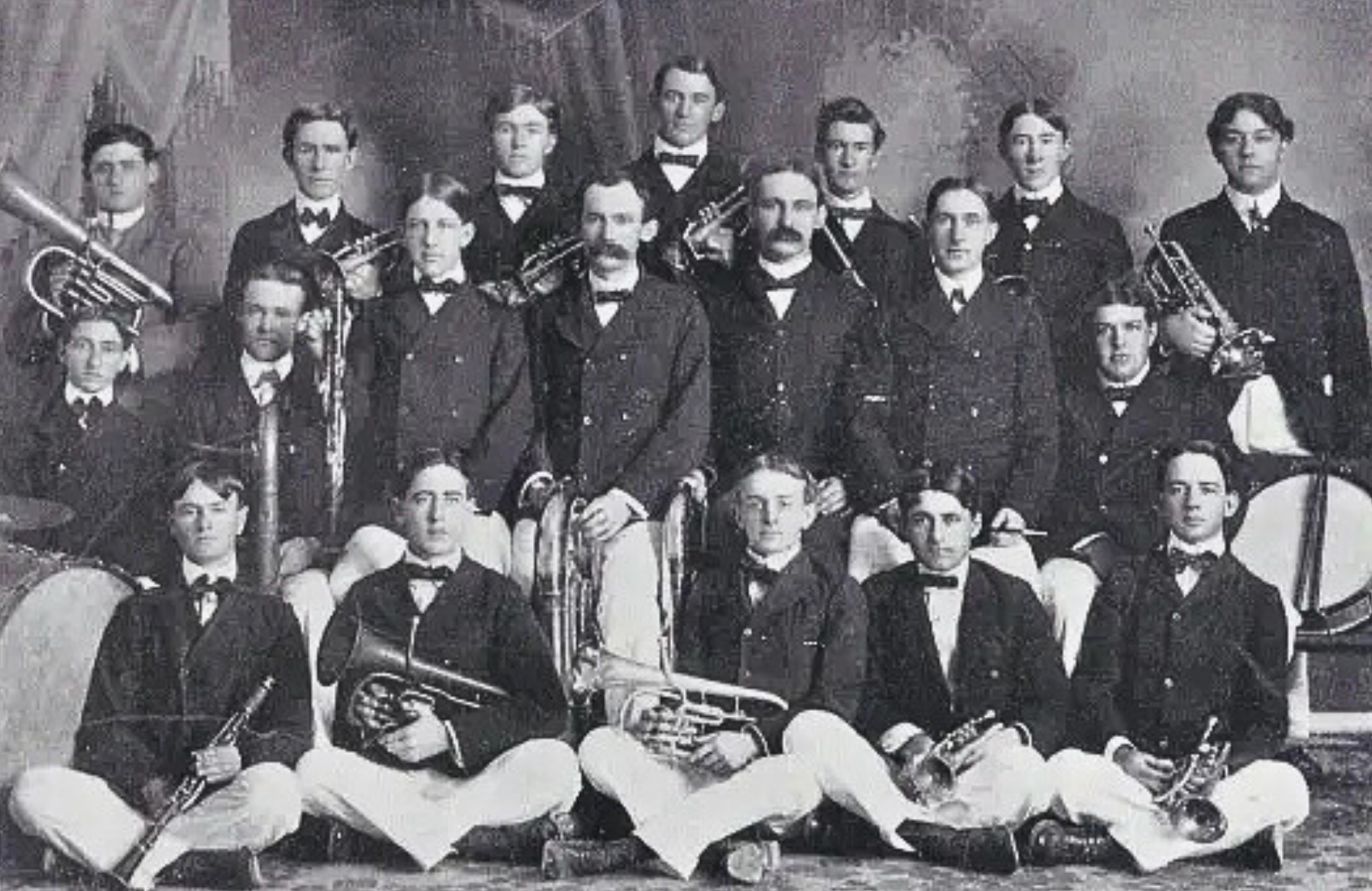
He organized the University’s orchestra and glee club, dates unknown. In 1900, sensing the need for an institutional unit, Schoch founded the Longhorn Band. Legend has it, he and Dr. H. E. Baxter, who would become its first director, purchased $150 worth of instruments from a local pawn shop and recruited 16 students from his industrial chemistry class to play and march together. Following Baxter, Schoch would later serve as band director for 19 years.
Schoch went on to be a member of UT faculty for 65 years. In 2016, the Longhorn Band honored him by arranging a special marching formation to spell out "Schoch" and transition to spell out "McKetta" on the football field during a home game in honor of the department's centennial celebration.
The Chemistry of Music
The marrying of music and chemistry (and chemical engineering) isn’t far-fetched.
According to the Cockrell School, students in engineering disciplines account for the most represented college or school in the Longhorn Band, usually making up 20-30% of its approximately 375 members.
A 2018 article published in Chemical & Engineering News posited the connection between music and chemistry, "Many chemical concepts are deeply rooted in patterns, such as the periodic table of the elements. The first is pattern recognition... musicians, like scientists, hone their skill through their ability to recognize, repeat and perfect playing these patterns.” It goes on to draw parallels between the development of fine motor skills and timing, both in music and research laboratories. And the ability to learn from one’s mistakes, “then practice, and more practice to truly learn the music to perfection.” The two disciplines aren’t so different after all.
Learn other facts you may not know about the Longhorn Band.
--
Do you have a story about chemical engineering and the Longhorn Band? We’d love to hear from you, tell us your story


